

How to Export to Norway and Switzerland: Customs, VAT and Origin for EU Suppliers
Norway and Switzerland are close to the EU single market but outside the customs union. What EU suppliers need for customs, import VAT and preferential origin.
5 min read
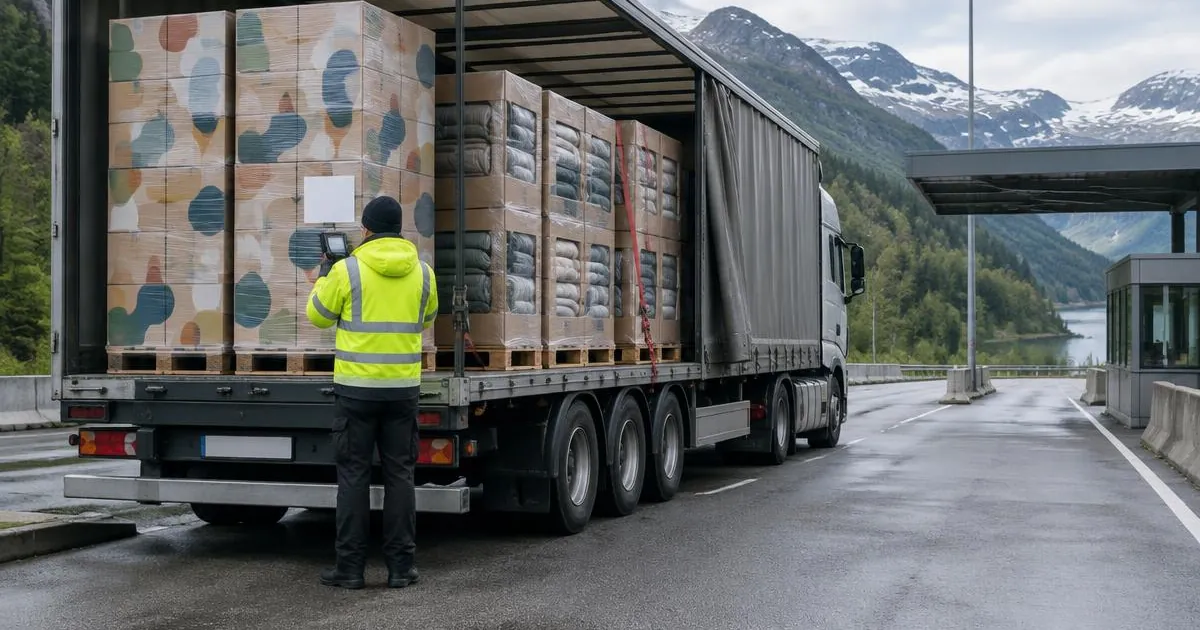
To export to Norway or Switzerland from the EU, you need customs formalities on both sides of the border, even though both countries are closely tied to the EU single market. Your customer, or its agent, makes an import declaration and pays import VAT, and preferential origin can matter for goods that still carry duty, such as textiles going to Norway. Norway's VOEC scheme is for sales to consumers only, so it does not help with B2B shipments.
This article is general information, not legal, tax or customs advice.
EEA and EFTA: why there is still a customs border
Norway, Iceland and Liechtenstein are in the European Economic Area. The European Parliament's fact sheet on the EEA, Switzerland and the North explains that EEA members take part in the EU's internal market, but that the EEA does not cover the customs union. Switzerland is in EFTA but not in the EEA, and arranges access to the internal market through more than 120 bilateral agreements, including a free trade agreement from 1972.
For a supplier planning to export to Norway or Switzerland, this has a practical meaning. Product rules are often aligned, but goods still need export and import declarations, and VAT is charged on import rather than through the EU's intra-community rules. Our guide to selling to business buyers in other EU countries covers the EU side, which works differently.
How to export to Norway: customs and import VAT
Most of the formalities when you export to Norway happen on the import side. Norwegian Customs' import guide for beginners sets out the basics. Goods imported into Norway generally need a customs declaration, which is made electronically in the TVINN system, often by a forwarding agent. The importer remains responsible for making sure the import and customs clearance are carried out properly.
- Customs duty: most goods are free of duty in Norway. Duty mainly applies to textiles, such as clothing, and to foodstuffs.
- Import VAT: the standard rate is 25 percent, and 15 percent for foodstuffs. Any duty paid is included in the VAT base.
- VAT-registered importers: they calculate and report import VAT on their VAT return to the Norwegian Tax Administration instead of paying it at the border.
When you export to Norway, the EU export declaration is made on your side with your EORI number, usually by your forwarder.
Digitoll: information before the border
Norway has moved to digital customs at the border. Under Digitoll, information about the transport and the goods must be submitted digitally before or at the latest at the time of border crossing. The driver of the means of transport is legally responsible for the notification, while the importer is responsible for the declaration. In practice this means your exports to Norway should leave with complete commercial documents so that the carrier and the agent can file on time.
Why VOEC does not apply to B2B sales
Many suppliers who start exporting to Norway hear about the VOEC scheme first. According to Norwegian Customs' page on the VOEC scheme, it covers goods for private use bought by private persons, with a value limit of NOK 3,000 per item. A pallet of printed packaging or a set of exhibition panels for a Norwegian company falls outside it and goes through the normal import procedure with import VAT.
How to export to Switzerland: customs and VAT
Swiss Customs (FOCBS) has an importation checklist for companies. Goods must be declared to Swiss Customs, at the latest when they enter the customs territory, either by the importer or by a service provider such as a haulier, courier or customs clearance firm. Imports are subject to levies such as VAT and customs duties, and a UID number is needed for electronic declarations. The checklist also notes that the e-dec Import system is being replaced by Passar Import, with the changeover planned between the second quarter of 2026 and the first quarter of 2027.
Industrial goods are duty free
Switzerland abolished its industrial tariffs, and the FOCBS page on the abolition of industrial tariffs confirms that the change entered into force on 1 January 2024 and covers goods in chapters 25 to 97 of the tariff, apart from some agricultural products in chapters 35 and 38. Printed matter, packaging, signage and promotional products therefore generally enter without duty, but import VAT still applies.
Swiss import VAT
The normal Swiss VAT rate is 8.1 percent, with a reduced rate of 2.6 percent for items such as foodstuffs and printed media, according to the Federal Tax Administration's page on Swiss VAT rates. The importer pays it, so make clear in your quote that prices exclude Swiss VAT.
Preferential origin when you export to Norway or Switzerland
Goods that meet the rules of origin can get preferential treatment under the free trade agreements both countries have with the EU. Our guide to EUR.1 and preferential origin explains the rules in detail. In short, the main points for exporters are these:
- EUR.1 movement certificate: Norwegian Customs' page on proof of origin says any exporter can use it, with no value limit, and it is certified by customs in the exporting country.
- Origin declaration: made by the exporter on the invoice, without customs certification. Exporters that are not approved can only use it up to a value limit, while approved exporters have no limit. Norwegian Customs notes that an origin declaration is valid for four months.
When origin matters most
For exports to Norway, origin matters most for goods that still carry duty, such as textiles and clothing. A supplier of printed workwear or event T-shirts should check whether the goods meet the origin rule before quoting. For Switzerland, the FOCBS notes that no preliminary proof of origin is required at import for industrial goods that will stay in Switzerland, although one is still needed if the goods will be re-exported to a free trade partner.
Quoting for buyers in Norway and Switzerland
Whether you export to Norway or to Switzerland, agree the Incoterm early. With DAP, the buyer handles import clearance and VAT, and you deliver to the agreed place. With DDP, you take on the import yourself. Our guide to Incoterms 2020 explains the difference.
On Flobid, buyers in Norway and Switzerland can send a request to suppliers that deliver to their country, and the quote form uses DAP as its default Incoterm. If you supply branded textiles or giveaways, see what buyers ask for in promotional merchandise.
Sources
- The European Economic Area (EEA), Switzerland and the North, European Parliament, Fact Sheets on the European Union
- Import Guide for Beginners, Norwegian Customs
- Obligations and regulations (Digitoll), Norwegian Customs
- The VOEC scheme, Norwegian Customs
- Importation checklist, Federal Office for Customs and Border Security (FOCBS), Switzerland
- Abolition of industrial tariffs, Federal Office for Customs and Border Security (FOCBS), Switzerland
- Swiss VAT rates, Swiss Federal Tax Administration
- Proof of origin, Norwegian Customs
Frequently asked questions
Is Norway in the EU customs union?
No. Norway is in the EEA and takes part in the internal market, but the EEA does not include the customs union, so goods need export and import declarations.
Can I use VOEC for B2B sales to Norway?
No. VOEC covers goods for private use bought by private persons, up to NOK 3,000 per item. Sales to Norwegian businesses go through the normal import procedure.
Do I pay duty when I export to Switzerland?
Switzerland abolished duties on industrial goods in chapters 25 to 97 from 1 January 2024, apart from some agricultural products. Import VAT, with a normal rate of 8.1 percent, still applies.
What is the import VAT rate in Norway?
The standard import VAT rate in Norway is 25 percent, and 15 percent for foodstuffs. VAT-registered businesses report it on their VAT return.