

GPSR for Promotional Products: What Buyers of Branded Merchandise Need to Know
The General Product Safety Regulation also covers free giveaways. What it requires, who is responsible, and what to ask your merchandise supplier.
5 min read
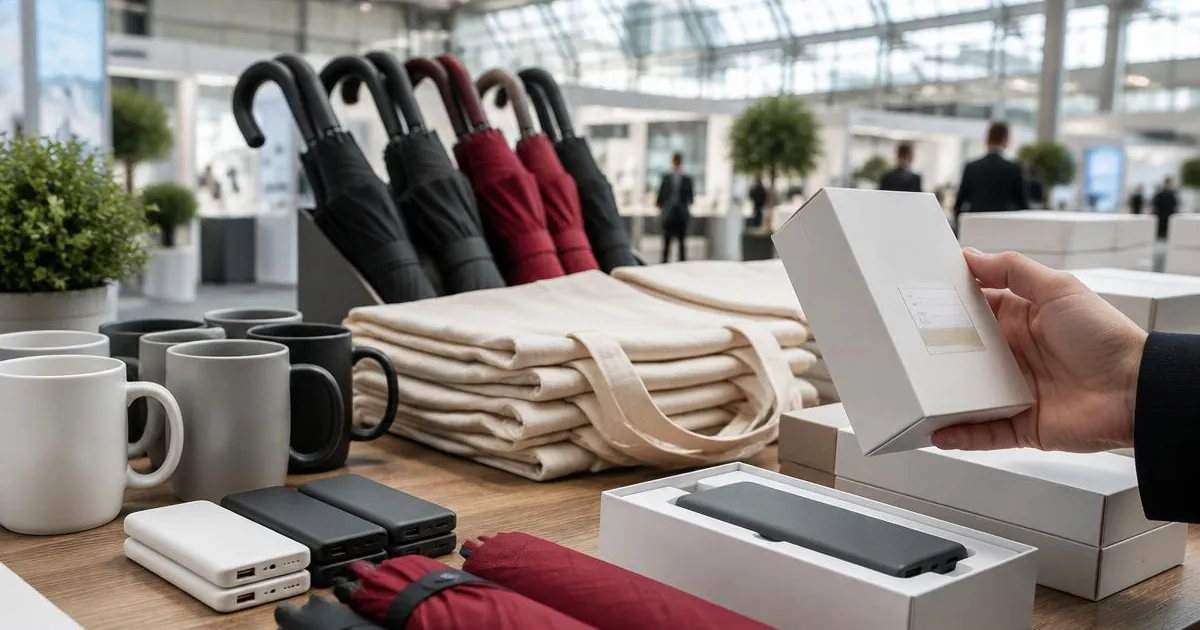
The GPSR, the EU General Product Safety Regulation, applies to promotional products that end up with consumers, including items given away free at events or sent as client gifts. Since 13 December 2024 it requires a risk assessment, traceability details on the product and an economic operator in the EU for every consumer product placed on the market. For buyers of branded merchandise, the practical question is simple: can your supplier show the documents the GPSR asks for?
This article is general information, not legal advice.
What is the GPSR?
Regulation (EU) 2023/988 on general product safety replaced the old General Product Safety Directive. It sets the basic safety rules for non-food consumer products in the EU, and it fills the gaps where no specific product law applies. Ireland's Competition and Consumer Protection Commission summarised the start date and new tasks when the new EU product safety laws came into force: risk assessment and technical documentation for manufacturers, checks by importers, an EU responsible person, and accident reporting and complaint handling along the supply chain.
Why the GPSR matters for promotional products
Mugs, umbrellas, power banks, toys for trade fair stands and textile bags are consumer products, even when a company buys them. A purchasing department may never sell them, but the people who receive them use them at home. That makes the GPSR relevant to almost every merchandise order.
Does the GPSR apply to free giveaways?
Yes, in most cases, because the Commission's guidelines on the application of the EU general product safety framework by businesses, published in the Official Journal in November 2025, explain that making a product available in the course of a commercial activity counts whether it is in return for payment or free of charge. A free pen handed out at a trade fair is still supplied as part of a business activity.
Products for professionals that reach consumers
The same guidelines say that products first designed for professional use are covered once they have migrated to the consumer market. A sturdy work torch with a logo that employees take home is a typical case for merchandise buyers to think about.
Products used during a service
Products provided to consumers in the context of a service are also covered. If your event lends visitors branded headphones or a charging station they operate themselves, those items fall within the GPSR too.
What GPSR obligations should your supplier meet?
The UK Office for Product Safety and Standards has published a clear detailed guidance on EU Regulation 2023/988 for goods placed on the Northern Ireland market, which follows the EU text. Under the regulation, the core duties for manufacturers are:
- Risk assessment: carry out an internal risk assessment and draw up technical documentation before the product is placed on the market.
- Record keeping: the documentation must be kept for 10 years from the date the product is placed on the market.
- Traceability: the product carries a batch or serial number or another identifying element.
- Contact details: the manufacturer's name, trade name or trademark, plus a postal and an electronic address.
- EU responsible person: a responsible economic operator established in the EU, whose details appear on the product, the packaging or an accompanying document, according to the CCPC.
According to a summary of the Commission guidance by law firm Noerr, an electronic address can be an email address or a dedicated section of a website where consumers can contact the company directly. The same summary notes that a risk analysis is always required and that the guidelines include a template.
GPSR and accidents, recalls and complaints
When a manufacturer believes a product is dangerous, it must inform market surveillance authorities through the Safety Business Gateway. Noerr's reading of the guidelines is that accident reporting is triggered by incidents causing death or serious adverse effects on health. For buyers, the relevant question is whether your supplier has a process for this and how it would reach you and the people who received the items.
| Role | Typical GPSR tasks |
|---|---|
| Manufacturer | Risk assessment, technical documentation, traceability and contact details |
| Importer into the EU | Check that the manufacturer has met its duties and add its own details |
| Distributor or promotional agency | Check labelling and information before supplying the product |
| Buyer giving items away | Choose suppliers that can show the documents; keep records of what was handed out |
Does your logo make you the manufacturer?
This is a common question when a product is printed with the buyer's brand. For CE-marked goods, the European Commission explains that importers and distributors who market products under their own names take over the manufacturer's responsibilities. Whether a decorated giveaway puts you in that position depends on the set-up, so agree in the contract who acts as manufacturer and whose details go on the product, and ask an adviser if you are unsure.
A GPSR checklist for promotional product orders
- Ask who the manufacturer and the EU responsible person are, with full contact details.
- Ask for confirmation that a risk assessment and technical documentation exist for the exact product.
- Check where the batch number and contact details will appear: on the product, the packaging or an insert.
- For electronics, ask for the CE documents as well, see our guide to CE marking for buyers.
- For plastics, rubber and coatings, ask for a chemical declaration, see REACH SVHC rules for promotional products.
- Keep a record of what was handed out and to whom, in case of a recall.
Standards help too, and Noerr notes that the guidelines confirm standards adopted under the old directive still give a presumption of conformity under the GPSR, so test reports against those standards remain useful evidence.
Finding suppliers who can show GPSR documents
When you send a request on Flobid, you can ask every supplier to confirm the GPSR details and attach documents with the quote. That makes the safety information part of the comparison, not an afterthought. Start a request for promotional merchandise and list the documents you need.
Sources
- Regulation (EU) 2023/988 of the European Parliament and of the Council of 10 May 2023 on general product safety, EUR-Lex (2023)
- Commission notice: Guidelines on the application of the EU general product safety legislative framework by businesses, EUR-Lex (2025)
- New EU product safety laws now in place, Competition and Consumer Protection Commission (2024)
- EU Regulation 2023/988 on General Product Safety: detailed guidance, Office for Product Safety and Standards, GOV.UK (2025)
- Importers and distributors, European Commission
- New Commission guidelines on the GPSR: clarifications and scope for action for companies, Noerr (2025)
Frequently asked questions
Does the GPSR apply to free promotional gifts?
In most cases, yes, because the Commission's guidelines explain that supplying a product in the course of a commercial activity counts whether it is paid for or free of charge.
When did the GPSR start to apply?
The General Product Safety Regulation has applied since 13 December 2024.
What contact details must be on a product under the GPSR?
The manufacturer's name, trade name or trademark with a postal and an electronic address, plus an identifying element such as a batch or serial number. The details of the EU responsible person must appear on the product, its packaging or an accompanying document.