

EORI Number Explained: Who Needs One and How to Get It
An EORI number identifies your business in customs procedures. Here is who needs one, how to apply in the EU, how GB and XI numbers work and how to check one.
5 min läsning
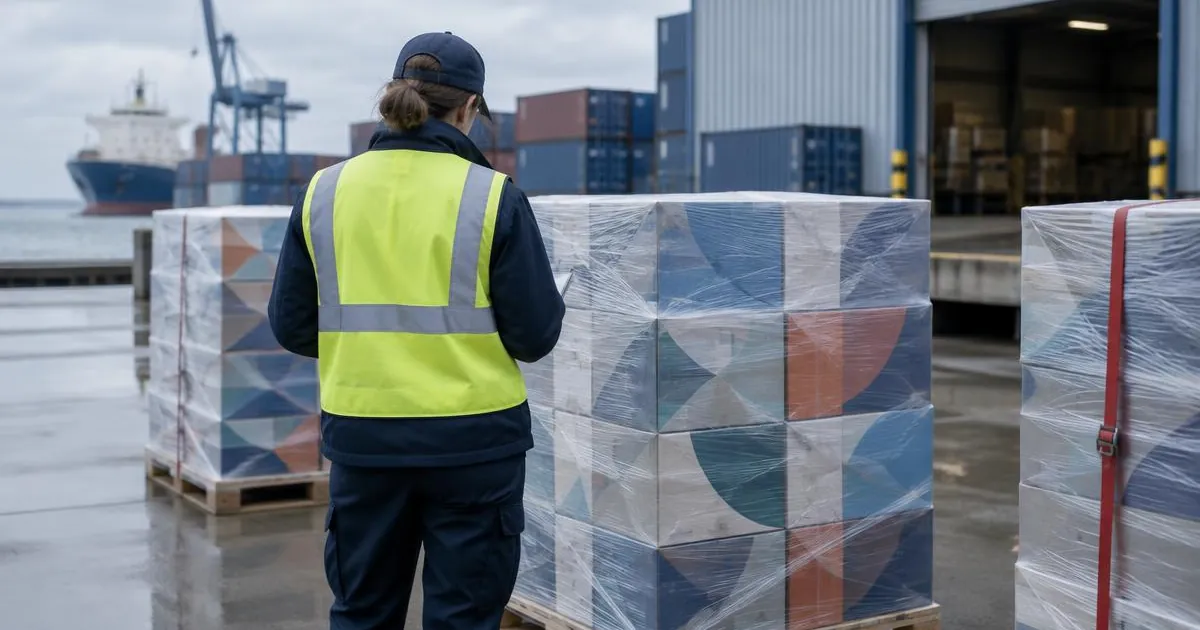
An EORI number (Economic Operators Registration and Identification number) identifies a business in customs procedures. In the EU you need an EORI number for customs operations, such as exporting goods to the United Kingdom, Norway or Switzerland, or importing goods from outside the EU. This guide explains who needs one, how to apply, how UK numbers differ and how to check a number.
This is general information, not legal or customs advice. Check your own situation with your customs authority or forwarder.
What is an EORI number?
The European Commission describes it as mandatory for the clearance of all types of customs operations in the EU customs territory. Customs authorities use it to recognise your company on declarations, in customs decisions and in their systems.
An EORI number identifies one person or company uniquely. A business can hold only one valid EU number at a time, and the number has no expiry date. It can be invalidated on request or when the business stops trading.
What an EORI number looks like
An EU EORI number starts with the two-letter code of the issuing country, followed by an identifier of up to 15 letters and digits that is unique within that country. The national part is set by each country. In the Netherlands, for example, the Chamber of Commerce explains that the number is NL followed by the company's RSIN, with leading zeros added if the RSIN has fewer than nine digits.
Who needs an EORI number?
You need an EORI number whenever your business is involved in customs formalities with countries outside the EU customs union. Typical cases for a print, packaging or display supplier:
- You export goods from the EU, for example to a customer in the UK, Norway or Switzerland.
- You import goods into the EU, for example materials or machines from outside the EU.
- You apply for a customs authorisation or decision.
You also need one when a forwarder files the declaration for you. The Dutch Chamber of Commerce notes that you need one even if you import or export only occasionally, and also when a forwarding agent makes the declaration on your behalf.
When you do not need one
Goods that move between EU member states do not go through customs, so a sale from Sweden to Germany or from Poland to France does not require one. VAT rules still apply to those sales; see selling to business buyers in other EU countries.
How to get an EORI number in the EU
Where you apply depends on where your business is established. According to the European Commission, the rules are as follows:
- Businesses established in the EU apply to the customs authority of the country where they are established.
- Businesses outside the EU without an EU establishment apply in the EU country where they plan to carry out their first customs operation.
- Businesses outside the EU with several permanent EU establishments can apply in any of those countries.
One EU EORI number is valid in all member states. The procedure, processing time and any costs are set nationally. In the Netherlands, for instance, the application is free, and some companies can create the number themselves from their RSIN rather than applying separately.
GB and XI EORI numbers for UK trade
Since Brexit, the United Kingdom issues its own EORI numbers. HMRC's guidance explains that businesses moving goods to or from Great Britain need a number starting with GB to submit customs declarations there, and an EU number does not replace it.
When an XI number is needed
Northern Ireland has its own prefix, and according to HMRC, an XI number is needed for making declarations in Northern Ireland and for some movements between Northern Ireland and Great Britain or other non-EU countries. To get one, a business must already hold a number starting with GB, and a business established in Northern Ireland should hold an XI number rather than an EU-27 number.
HMRC also notes that most British businesses will not need an EU number, because the EU business they trade with usually submits the EU declaration. For the wider picture, read selling goods to UK businesses after Brexit.
How to check an EORI number
The European Commission links to an EORI validation tool that checks whether a number, or the name and address of a registered person, is valid. Note that the Dutch Chamber of Commerce advises that you search by number only, not by company name. A buyer or forwarder may ask you for your EORI number before a shipment, so keep it on your quotes and shipping documents.
Common mistakes with an EORI number
- Applying too late. Ask for the number before the first export order is ready to ship, not when the truck is waiting.
- Assuming the VAT number is enough. VAT registration and EORI registration are separate, even if the two numbers look alike.
- Using the wrong prefix for UK trade. Declarations in Great Britain need a GB number, and Northern Ireland has its own XI rules.
- Leaving it off the paperwork. Put the number on quotes, commercial invoices and shipping instructions so your forwarder does not have to ask.
- Not telling customs about changes. If your company name, address or legal form changes, update the registration with the authority that issued it.
None of these mistakes is expensive on its own, but each can hold up a shipment at the border while the paperwork is put right.
An EORI number is only the start of exporting
Outside the EU you also need export and import declarations, the right commodity codes, rules of origin if you want preferential duty and clear delivery terms. Many suppliers let a forwarder handle the declarations, but the number on them is still yours.
Agree the delivery term with the buyer so it is clear who clears the goods for export and import. The ICC Incoterms rules are eleven three-letter terms that clarify who handles which tasks, costs and risks. See Incoterms 2020 explained and HS codes and CN codes explained for the next steps.
Selling across Europe with Flobid
Buyers on Flobid are located across Europe, inside and outside the EU, and state their delivery country in the request. Suppliers choose which countries they deliver to, so you only receive requests you can serve. The quote form uses DAP as the default Incoterm, and you can state another term if you agree it with the buyer. Read how Flobid works for suppliers on the supplier page.
Sources
- Economic Operators Registration and Identification number (EORI), European Commission, Taxation and Customs Union
- IMPS03060: Import entry procedures: Economic Operator Registration and Identification (EORI), HM Revenue and Customs
- Applying for an EORI number? What you should know, KVK, Netherlands Chamber of Commerce
- Incoterms rules, International Chamber of Commerce
Vanliga frågor
Do I need an EORI number to sell to another EU country?
No. Goods moving between EU member states do not go through customs, so no EORI number is needed for that trade.
Where do I get an EORI number?
From the customs authority of the EU country where your business is established. Businesses outside the EU apply in the country of their first customs operation. One EU EORI number is valid in all member states.
Do I need a GB EORI number to export to the UK?
To submit customs declarations in Great Britain a business needs an EORI number starting with GB. Often the UK importer or a forwarder handles the UK declaration, so agree the delivery term first.
Does an EORI number expire?
No. An EU EORI number has no expiry date, but it can be invalidated on request or when the business stops trading.