

Die Cutting Explained: Flatbed vs Rotary vs Digital
How flatbed, rotary and digital cutting turn printed sheets into boxes, displays and labels, and what each method means for tooling cost, speed and run length.
5 min read
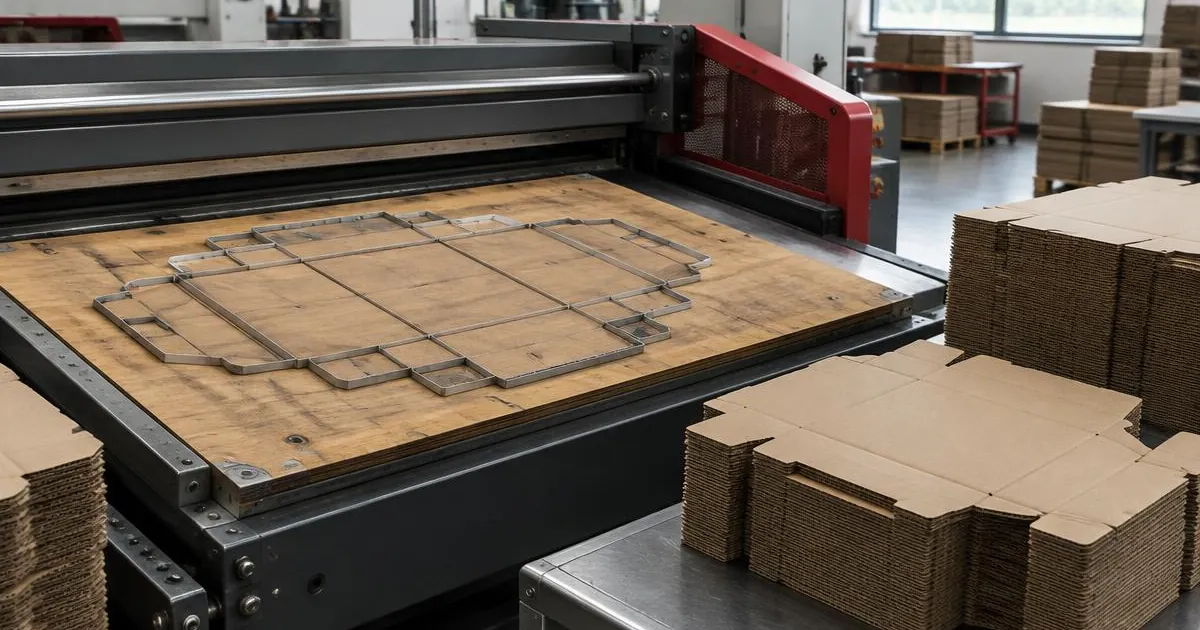
Die cutting is how printed sheets become boxes, displays, labels and other shaped products. Flatbed die cutting presses a flat cutting tool down onto the sheet and suits corrugated board, thick materials and frequently changing jobs. Rotary die cutting uses a cylindrical tool and is built for speed and high volumes. Digital cutting needs no physical die at all, using a knife or a laser guided by the file, which makes it the usual choice for samples, prototypes and short runs.
This guide explains the three methods neutrally, and what each means for cost, lead time and quality when you order packaging or displays.
What is die cutting?
A cutting die is a tool with sharp steel rules for cutting and blunt rules for creasing, arranged in the shape of the flat blank. When the die meets the board under pressure, it cuts the outline, creases the fold lines and can add perforations in one step. The waste is then stripped away and the blanks are separated, folded and glued.
For corrugated work, a Labelprint24 overview explains that cutting contours are usually cut into plywood with a saw or laser and then fitted with cutting and creasing rules. Each new shape needs a new die, which is why tooling cost and lead time matter for short runs.
Flatbed die cutting
A flatbed machine presses a flat die onto the sheet from above. According to FESPA's guide to cutting and creasing corrugated, flatbed machines can make very precise cuts, and some replace the flat press plate with a cylinder roller to apply pressure more evenly on thicker or larger formats. Examples described in that guide handle boards up to about 1.65 by 1.3 metres and up to 7 mm thick at up to around 7,000 sheets per hour.
Where flatbed fits
- Corrugated sheets and litho-laminated boards for retail packaging and displays
- Thick or dense materials, because the machine can open wide
- Frequently changing jobs, since flat dies are simpler and quicker to change
Labelprint24 notes that flat tools in common formats are available at relatively low cost and allow parts to be nested closely, which reduces waste.
Rotary die cutting
Rotary machines use a cylindrical die that turns against an anvil as the material passes through. FESPA describes rotary as common for labels, films and folding cartons, and used for some very high volume corrugated box production, with examples running at up to around 12,000 sheets per hour. Rotary units are often combined with printing in one line.
Where rotary fits
- Long runs where speed per sheet decides the price
- Labels and roll-fed materials, including kiss cutting through the face material but not the liner
- Inline production that prints, cuts and sometimes laminates in one pass
Rotary tooling usually costs more, and a technical note from Plitek describes rotary as faster and suited to tight tolerances and intricate cuts on thin, flexible materials, while flatbed tooling is cheaper and quicker to make and handles thicker, harder materials.
Digital cutting without dies
Digital cutting reads the cut path from the file, so there is no tool to make and every sheet can be different.
Knife-based cutting tables
Flatbed cutting tables move a tool head over the sheet. In its overview of digital cutting tables, FESPA lists tools such as basic and tangential knives, routers for denser materials, creasing and perforating tools, and V-cut and kiss-cut tools. Tables handle plastic sheets, foam board and corrugated board well, while wood and aluminium composite can slow the cutting. Camera systems recognise printed marks so the cut follows the print. Typical uses are display graphics, short-run packaging, prototypes and textiles.
Laser-based digital die cutting
FESPA's corrugated guide also describes a laser-based approach that separates creasing from cutting: creasing uses a quickly produced polymer creasing foil, and cutting is done by an array of lasers that can change the pattern from sheet to sheet.
Flatbed vs rotary vs digital: how to choose
| Aspect | Flatbed die | Rotary die | Digital cutting |
|---|---|---|---|
| Tooling | Flat die, lower cost | Cylindrical die, higher cost | None |
| Speed | Medium | Highest | Lowest per sheet |
| Best run length | Medium to long | Long | Samples to short runs |
| Materials | Corrugated, thick boards, laminated sheets | Labels, films, cartons, some corrugated | Board, foam, plastics, textiles |
| Design changes | New die needed | New die needed | Change the file |
Quality points that apply to every method
FESPA's corrugated guide stresses that a good cut leaves clean, sharp edges without loose fibres or tears, and that even pressure is key to clean cuts and creases. It also points to practical details: die wear should be monitored, feeders and strippers matter for warped boards and waste removal, and board moisture must be controlled to stop cracking along crease lines. If you see cracked folds or fluffy edges on delivered boxes, these are the first things to raise with your supplier.
On precision, the sources differ: FESPA describes flatbed as very precise, while Plitek and Labelprint24 credit rotary with tighter tolerances for intricate work. In practice it depends on the machine, the tool and the material, so ask for samples if accuracy is critical.
What this means when you order boxes or displays
- Ask whether tooling is included. Many quotes list the die as a separate one-off cost, so reorders with the same die are cheaper.
- Ask who owns and stores the die. This matters if you ever move the job to another supplier.
- Use standard styles where you can. Standard box styles, described by FEFCO codes, are easier to quote. Our guide to FEFCO codes describes the standard styles in more detail.
- Prototype digitally. A digitally cut sample lets you test fit and folding before paying for a die.
- Allow time for tooling. A new die has to be designed, made and tested before production starts, so include it in your lead time plan for new designs.
Finding cutting tools and equipment
On Flobid you can send a request for cutting dies with your drawing and material, or a request for flatbed cutting tables if you are investing in digital finishing. You can also browse the machines and equipment category.
Sources
Frequently asked questions
What is the difference between flatbed and rotary die cutting?
Flatbed presses a flat die onto the sheet and suits corrugated and thick materials. Rotary uses a cylindrical die and is faster, which suits long runs, labels and cartons.
Do I need a cutting die for a small run?
Not always, because digital cutting tables and laser systems cut from the file without a die, which is common for samples, prototypes and short runs.
Why is the cutting die charged separately?
Each new shape needs its own tool, so suppliers often list it as a one-off cost. Reorders with the same die avoid that cost.