

Digital Corrugated Printing: How It Works and When to Use It
How digital corrugated printing works, from pre-print to direct-to-board inkjet, which inks are used, and when it beats flexo for boxes, versions and displays.
5 min di lettura
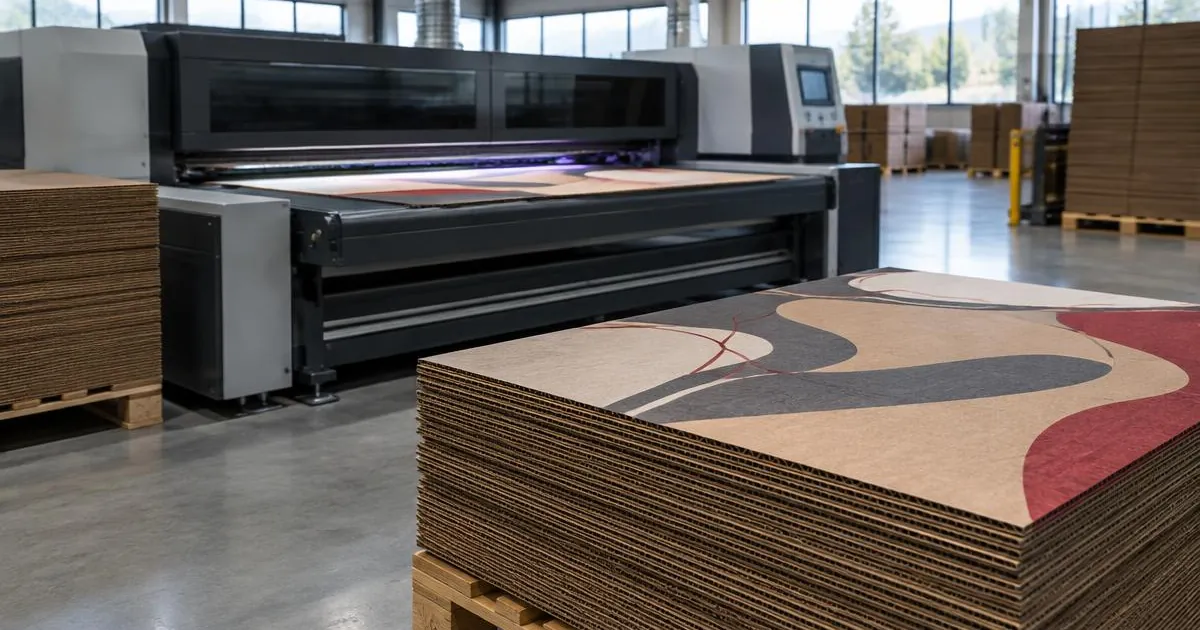
Digital corrugated printing uses inkjet heads to print boxes and displays straight from a file, with no printing plates. It can print the liner before the board is made, print on the corrugator line, or print finished boards directly. The main benefit for buyers is that short runs, many versions and quick design changes become affordable, while long runs of a single design usually stay on flexo or litho.
This guide explains the main approaches, the inks used, where digital fits and what to ask when you buy printed corrugated packaging.
How does digital corrugated printing work?
A FESPA article on the evolution of digital corrugated printing describes three points in the process where printing can happen.
Pre-print on the top liner
The outer paper liner is printed on a roll before it is combined with the flutes in the corrugator. Because the paper is flat and on a reel, this can run at high speed; FESPA mentions web presses running at up to around 300 metres per minute with water-based inks. It suits large volumes and high graphic quality but requires planning with the corrugator.
Inline on the corrugator
Some systems add inkjet printing to the corrugator itself. FESPA describes colour systems running at up to 300 metres per minute and monochrome units for variable data, text and barcodes.
Post-print on finished board
Here the finished corrugated sheet is printed directly, often in a separate plant. Boards are not always flat, so presses use vacuum transport. This is the most flexible route for short runs, samples and displays.
Single-pass and multi-pass presses
Single-pass presses have fixed print heads across the full width and print the sheet in one pass, which gives high throughput. FESPA notes that single-pass leaves no room for error, so vision systems inspect output and faulty boards are rejected and reprinted. Multi-pass printers move the heads back and forth across the board, which is slower but more forgiving, and suits short runs and displays.
As an example of current single-pass specifications, Canon's October 2025 announcement of a corrugated press lists boards up to 1.7 metres wide and 1 to 8 mm thick, speeds up to 8,000 square metres per hour, and water-based pigment inks suitable for indirect food contact. The company positions it for short to medium runs.
Which inks are used, and are they food safe?
According to FESPA, most corrugated inkjet presses use water-based inks, which avoid the photoinitiator migration risk associated with UV curable inks. Vendors have certified inks against packaging standards, including the Swiss Ordinance on materials in contact with food. Some presses use UV curable ink, and FESPA notes that at least one maker was developing a water-based version.
If the box will hold food, even indirectly, ask the supplier which ink and primer they use, which declaration of compliance they can provide, and whether a functional barrier is needed. Our article on food contact packaging rules covers the regulatory side.
When does digital corrugated printing make sense?
| Need | Digital | Flexo or litho |
|---|---|---|
| Printing plates | None | Required for each design and colour |
| Short runs and samples | Strong fit | Plate cost spread over few boxes |
| Many versions or regional designs | Strong fit, versions per sheet possible | Each version needs new plates |
| Variable data and codes | Possible on every sheet | Limited |
| Very long runs of one design | Can be more expensive per box | Usually cheapest per box |
Typical applications
- Retail-ready and shelf packaging with seasonal or regional versions
- Cardboard POS displays and floor stands
- Product launches and test markets where volumes are uncertain
- Variable codes, barcodes and tracking numbers
FESPA names packaging and point of purchase displays as key applications, along with variable data such as barcodes and tracking numbers.
Quality and colour on brown and white board
Corrugated board comes with brown kraft or white top liners, coated or uncoated, and each takes ink differently. Many digital presses apply a primer before printing to control how the ink spreads. When you compare digital and conventional quotes, ask for a printed sample on the board you will actually use, and agree how brand colours will be checked. A colour that looks right on white coated board can look quite different on brown kraft.
Planning versions and reorders
Because digital needs no plates, you can split one order into several designs, for example by region, language or season, without paying set-up costs for each one. Ask the supplier how many versions fit into one order, whether there is a minimum per version, and how quickly a reorder can be produced from stored files.
How fast is the market growing?
Digital is still a small share of printed packaging but is growing quickly. Smithers values the digital packaging and label print market at USD 22.0 billion in 2025, or 4.1 percent of printed packaging, and forecasts USD 36.9 billion and 5.8 percent by 2030, according to the report summary. It notes inkjet gaining ground on large presses for cartons, corrugated and flexible packaging.
Trade fairs reflect the same direction, and FESPA Global Print Expo 2026 in Barcelona added a new Corrugated event alongside its wide-format shows, as reported by PrintWeek India.
Do not forget cutting and finishing
Printing is only half the job, because boxes and displays still need cutting and creasing. FESPA's guide to die cutting and creasing for corrugated describes how digital cutting systems, which need no physical die, suit short runs alongside conventional die cutters. If you order short runs, ask whether the supplier cuts digitally or needs a die, as this changes cost and lead time. Our article on flatbed, rotary and digital die cutting explains the options.
What to include in your request
- Box style, ideally as a FEFCO code, and internal dimensions
- Board grade and flute, or the load and stacking strength you need
- Print coverage, number of designs and quantity per design
- Food contact or other ink requirements
- Delivery country, address and date
With that information you can send one request for printed corrugated packaging on Flobid and receive comparable quotes from suppliers who deliver to your country. Ask suppliers to state whether they quote digital or conventional print so the comparison is fair.
Sources
- The evolution of digital corrugated printing, FESPA
- How to choose the right die cutting and crease technology for corrugated, FESPA
- The Future of Digital Print for Packaging to 2030, Smithers (2025)
- Canon announces the corrPRESS iB17, a new digital press for industrial-scale corrugated packaging printing, Canon Europe (2025)
- Fespa returns to Barcelona with two new events, PrintWeek India
Domande frequenti
What is post-print in corrugated printing?
Post-print means printing directly on finished corrugated board. It is flexible and suits short runs, samples and displays.
Are digital corrugated inks food safe?
Most corrugated inkjet presses use water-based inks and some are certified for indirect food contact. Always ask the supplier for the declaration that applies to your box.
When is digital cheaper than flexo for boxes?
Usually for short runs, many versions and samples, because no printing plates are needed. Very long runs of a single design are usually cheaper on flexo or litho.