

Dye Sublimation Printing Explained: Textiles, SEG and Soft Signage
How dye sublimation printing bonds colour into polyester, the difference between transfer and direct printing, and how it is used for SEG frames, flags and soft signage.
Lukuaika 5 min
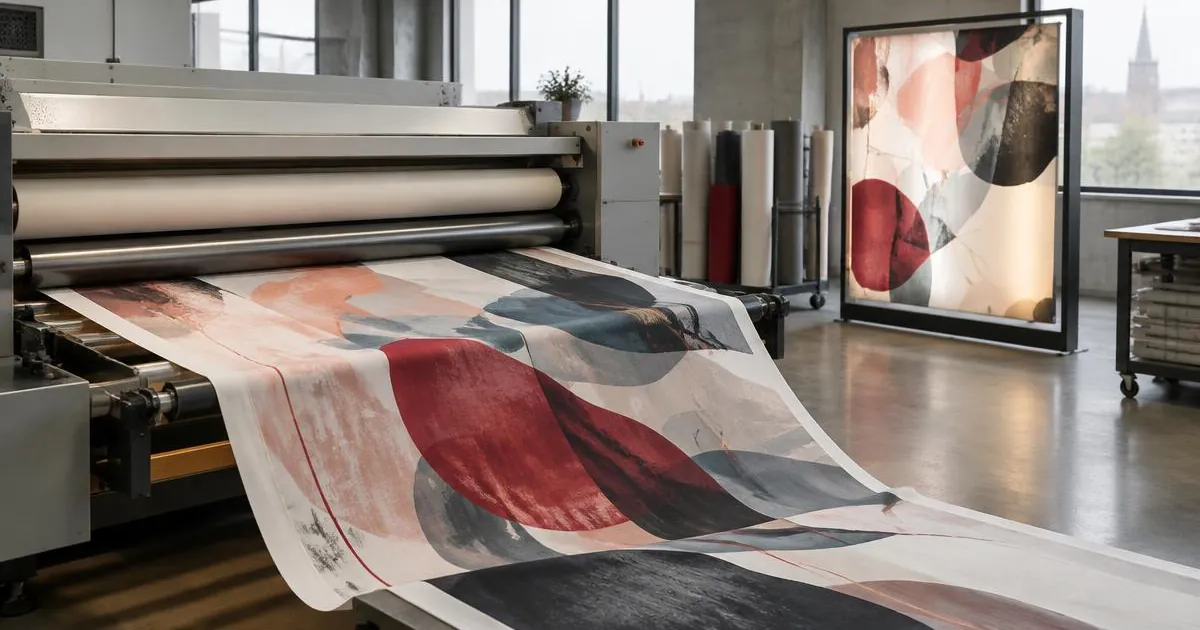
Dye sublimation printing uses heat to turn special inks into a gas that bonds with polyester fibres or polyester coatings, so the colour becomes part of the material instead of sitting on top. It is the standard method for printed fabric displays, flags, sportswear and many promotional items. Prints are bright, light and washable, but the process only works on polyester or polyester-coated surfaces.
This guide explains how the process works, the difference between transfer and direct printing, and how it is used for SEG frames and soft signage.
How does dye sublimation printing work?
As PrintWeek describes it, dye-sub inks are printed with an inkjet printer, and then a heat press applies heat and pressure. The ink sublimates, which means it turns from solid to gas without becoming liquid first, and penetrates the substrate. As it cools, it solidifies beneath the surface.
Polyester is essential, because it is the fibre that absorbs the dye. Textiles are therefore polyester fabrics, and hard items such as mugs, phone cases or metal panels are blanks with a polyester coating. Cotton and other natural fibres do not take sublimation dye in the same way.
The equipment involved
- Printer: an inkjet printer loaded with sublimation inks, from desktop units to industrial textile printers
- Heat press or calender: flat presses for sheets and objects, roll-fed units for fabric by the metre, and special presses for 3D items
- Media: transfer paper for the transfer method, or fabric designed for direct printing
PrintWeek notes that 1.8 m and 3.2 m are common widths for textile production, and that the same hardware can often handle both transfer and direct work.
Transfer vs direct sublimation
There are two routes to get the image onto fabric. The Advanced Textiles Association compared them in an article interviewing several print companies.
Transfer sublimation
The image is printed onto transfer paper, which is then pressed against the fabric in a heated press or calender. Those interviewed describe the most saturated colour, higher sharpness and less dot gain, and good results on knits and textured fabrics. The extra paper and process step add material and labour cost and slow production.
Direct sublimation
Ink is printed straight onto the fabric, which is then fixed with heat. Direct printing removes the paper and transfer step, so it is faster and cheaper per square metre, but it needs coated fabric and is generally seen as slightly less sharp. It is widely used for soft signs and flags.
| Aspect | Transfer | Direct |
|---|---|---|
| Process | Print on paper, then heat transfer | Print on fabric, then heat fix |
| Colour and detail | Most saturated, sharpest | Good, generally slightly softer |
| Fabric | Uncoated polyester, knits, textured fabrics | Coated, smoother polyester fabrics |
| Cost and speed | More material and labour, slower | Less material, faster |
| Typical uses | Sportswear, detailed graphics | Flags, soft signage, banners |
This comparison is from 2010 and both methods have improved since, so treat it as a guide to the trade-offs rather than a fixed rule.
Dye sublimation printing for SEG and soft signage
Soft signage means printed fabric used for displays instead of rigid boards or vinyl. FESPA points out that dye-sublimated display textiles give very bright, saturated colours, especially when backlit, and that the graphics are light, easy to transport and install, washable and reusable.
What is an SEG frame?
SEG stands for silicone edge graphics, and according to PRINTING United Alliance, an SEG is a printed fabric graphic with a silicone bead sewn along its edges. The bead is pushed into a channel in an aluminium extrusion frame, which keeps the fabric taut and hides most of the hardware. SEGs are used in portable and modular exhibition displays, backlit lightboxes and retail interiors, and are printed with dye-sublimation or UV processes.
The same source stresses that not every fabric works with silicone beading. Fabric should have some stretch, and each graphic and bead combination should be test fitted in the specific frame system. For cleaning, it recommends spot cleaning or a gentle, cool machine wash, and warns against dry cleaning because it can cause shrinkage.
Advantages and limits of dye sublimation printing
The main strengths follow from the way the dye bonds with the fibre. Because the colour sits inside the fibre rather than in a layer on top, the fabric keeps its textile character. Display textiles are light to ship, quick to install and, as FESPA notes, washable and reusable, which makes them attractive for touring exhibitions and retail campaigns that change graphics often.
The limits are just as clear: the process depends on polyester, so natural fibres and many rigid materials need a polyester coating first. Results also depend heavily on the combination of ink, fabric, temperature and time in the press, and PrintWeek identifies time and temperature as key parameters. Small changes can affect colour, so consistent repeat orders depend on the supplier controlling these settings.
Investment ranges widely too, and PrintWeek describes entry-level kits of printer and heat press alongside industrial textile lines costing hundreds of thousands of pounds, which explains why many companies buy printed fabric from specialists rather than printing it themselves.
Where is sublimation used?
- Exhibitions and retail: SEG frames, lightboxes, fabric walls, hanging banners and counters
- Events and outdoor: flags, beach flags, gazebos and marquees
- Apparel: sportswear, cycling kit and workwear on polyester fabrics
- Promotional products: mugs, mouse mats, phone cases, lanyards and other coated or polyester items
- Interiors: printed fabric wall art and decorative textiles
What to specify when ordering sublimated fabric
Fabric and finish
Name the fabric type and weight, whether it must be backlit or blockout, and whether it needs a fire classification for the venue. Our guide to fire-rated exhibition materials explains the common classes.
Frame and edge
For SEG, give the exact frame system or channel dimensions, and ask the supplier to confirm the bead type. For banners and flags, specify hemming, eyelets or pole pockets.
Colour expectations
Fabric absorbs ink differently from paper, so brand colours can shift. Ask for a printed strike-off on the actual fabric if colour is important.
Getting quotes for printed fabric
On Flobid you can send a request for SEG graphics or a broader request for dye-sublimation fabric print to suppliers who deliver to your country. If the fabric is part of a full stand, our article on exhibition stand cost drivers helps you budget the rest.
Sources
- Wide range of applications wins fans for sublimation, PrintWeek
- The dye-sub debate: Transfer vs. direct, Advanced Textiles Association (2010)
- What are Silicone Edge Graphics?, PRINTING United Alliance (2019)
- Understanding the basics of inkjet and wide format printing, FESPA (2016)
Usein kysytyt kysymykset
Can dye sublimation print on cotton?
Not in the usual way, since sublimation dye bonds with polyester and is therefore used on polyester fabrics and on items with a polyester coating.
What is the difference between transfer and direct sublimation?
Transfer prints on paper first and then heat transfers the image, giving very saturated, sharp results. Direct prints on coated fabric and is faster and cheaper per square metre.
What is an SEG frame?
An aluminium frame with a channel into which a printed fabric graphic with a silicone edge bead is pushed, keeping the fabric taut.
Aiheeseen liittyvät sivut
- Etsi toimittajiaHae eurooppalaisia toimittajia kategorian ja maan mukaan.
- Maksuttomat pohjatTarjouspyyntöpohjat ja tarkistuslistat PDF- ja Word-muodossa.
- ToimittajilleTodellisia tarjouspyyntöjä, jotka vastaavat sitä, mitä valmistatte.
- BlogiOppaita hankinnasta, arvonlisäverosta, tullista ja tuotannosta.